
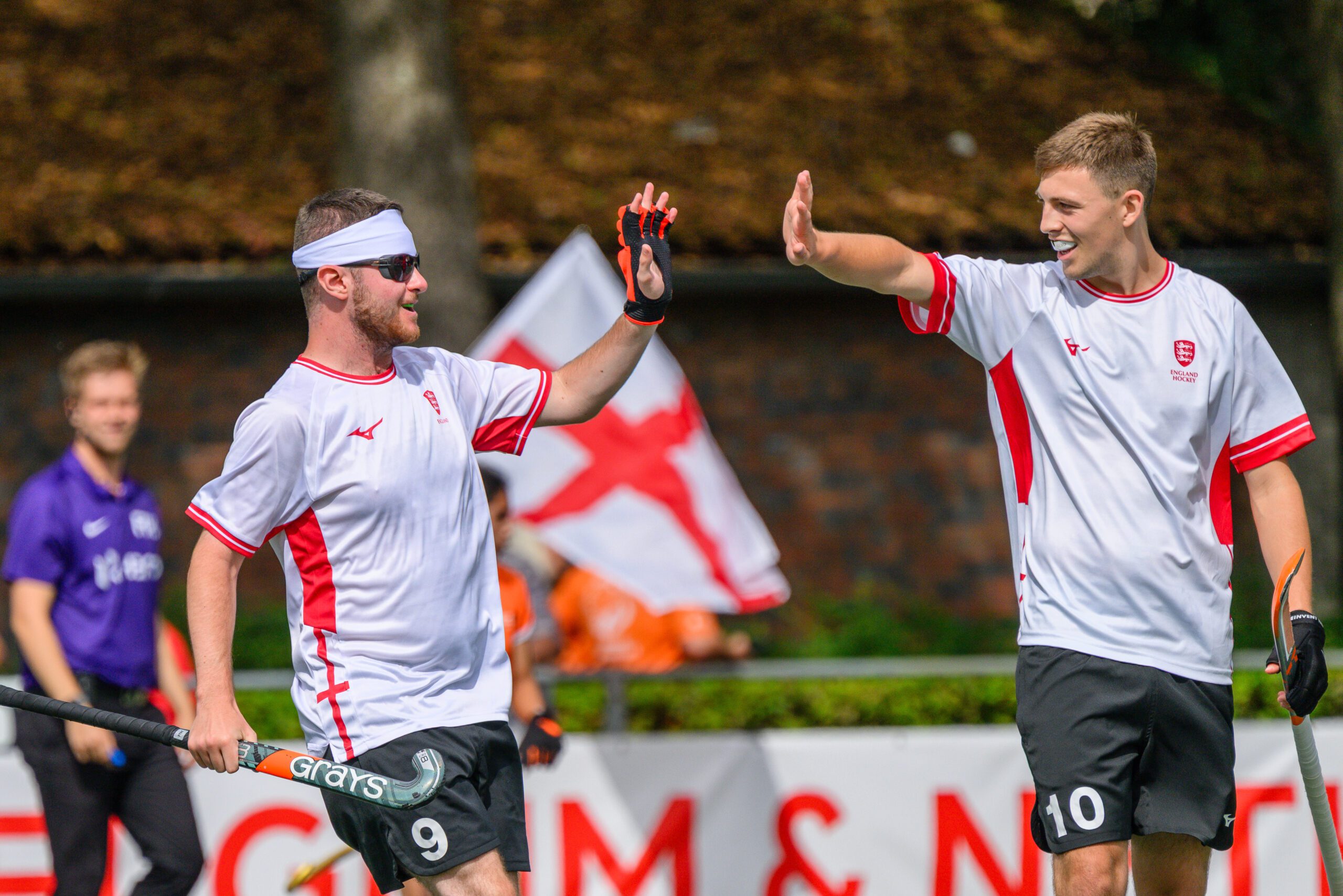
Since its inception in 2011, the EuroHockey ID Championships have become one of the most inspiring and important events on the European calendar and will form an emotional part of EuroChamps27 in London.
What began as a side event has grown into a flagship event, bringing together players, coaches, volunteers and families from across Europe, providing athletes with intellectual disabilities the opportunity to compete at an international level.
Where it all began
The story of the EuroHockey ID Championships traces back to 2011 in Mönchengladbach, Germany. Inspired by local pioneers Walter and Ottimar Meyer, founders of field hockey opportunities for people with intellectual disabilities in the region, the inaugural Walter Meyer Tournament was staged as a pilot event.
Club teams from Italy, Spain and the Netherlands travelled to Germany in what was the first international Hockey ID competition held alongside a major European hockey event.
The tournament culminated with matches in the championship stadium and a memorable medal ceremony featuring German internationals Christopher Zeller and Jan Marco Montag while iconic photos from Moritz Fürste went viral on Facebook.
EuroHockey’s Chief Development Officer, Norman Hughes was a key figure and he saw the impact the event had on players, teams and spectators, He formed a vision: Hockey ID should become a permanent feature of every EuroHockey Championship.
That vision quickly gathered momentum.
The competition returned in 2013 in Belgium and again in 2015 in London, establishing itself as a regular part of the calendar. At the time, the tournament was known as Euro ParaHockey, reflecting the broader drive towards making hockey more accessible and inclusive.
The event’s profile grew year by year. In London, increased visibility through social media helped introduce many hockey supporters to the athletes and their stories. Across Europe, national associations began exploring how they could develop sustainable Hockey ID programmes.
A major milestone came in 2014 when EuroHockey formally agreed that any nation hosting the senior EuroHockey Championships would also host the EuroHockey ID Championships.
This decision guaranteed a future for the tournament and emphasised that inclusion should sit at the heart of European hockey’s biggest events.
From club teams to national representation
As Hockey ID expanded, national programmes developed and participation evolved from club-based teams to national representative squads.
Germany’s journey reflected this growth. Ahead of the 2017 championships in Amsterdam, players from different clubs, schools and workplaces came together to form a national team for the first time. Similar developments occurred across Europe as countries invested in athlete support and more regular training opportunities.
The Amsterdam event marked another significant step forward. Players experienced a truly international championship atmosphere, while the Hockey ID community grew stronger through friendships and shared experiences that extended far beyond the field of play.
By 2019, the tournament hosted at HC Victory in Antwerp had become far more professional, benefiting from increasing organisational support and growing participation levels.
Like much of world sport, the championships faced challenges during the Covid-19 pandemic with the 2021 event postponed and eventually took place in 2022 at Pinoké in Amstelveen.
By this stage, participation had expanded dramatically; From just four nations in the early years, Hockey ID programmes were active across 11 European countries by this stage.
Mönchengladbach 2023: A Dream Realised
The 2023 EuroHockey ID Championships represented a landmark moment at the SparkassenPark. Returning to Mönchengladbach, where the journey had begun 12 years earlier, the event showcased how far Hockey ID had progressed.
Hosted by the DHB and Gladbacher HTC, teams competed as mixed-gender squads with, for the first time, each team was required to register at a minimum of two players from each gender on squad lists with at least one on field at all times.
The atmosphere captured the unique spirit of Hockey ID: competitive sport combined with friendship, cultural exchange and a sense of belonging.
In 2025, further recognition came with EuroHockey naming Hockey ID Championship trophies in honour of two pioneers of the movement.
The Championship I trophy honours Norman Hughes, whose leadership and advocacy helped transform Hockey ID from a small initiative into a permanent fixture of European hockey.
A former Great Britain Olympian, Hughes has spent decades championing opportunities for athletes with intellectual disabilities, both through EuroHockey and internationally with the FIH – leading to the first ParaHockey World Cup in August 2026.
The Championship II trophy is named after Elsbeth Ruys of the Netherlands. Ruys founded one of the first disability hockey programmes in Dutch hockey in 1993 and became a driving force behind inclusive hockey worldwide.
Her vision, determination and belief that hockey should be accessible to everyone helped create opportunities for thousands of players and inspired a generation of coaches, volunteers and administrators.
EuroChamps27
The EuroHockey ID Championships continue to grow in both scale and significance. More nations are developing programmes, participation levels are increasing and standards continue to rise across all divisions.
Yet the event remains true to its original purpose: creating unforgettable experiences for athletes with intellectual disabilities and ensuring that everyone has the opportunity to enjoy, compete and belong within the hockey family.
In 2027, the EuroHockey ID Championship’s importance is further cemented in the design of the EuroChamps27 logo – three equal parts with the men’s and women’s competition – with the final stages of the competition taking place on the main stage in London.